
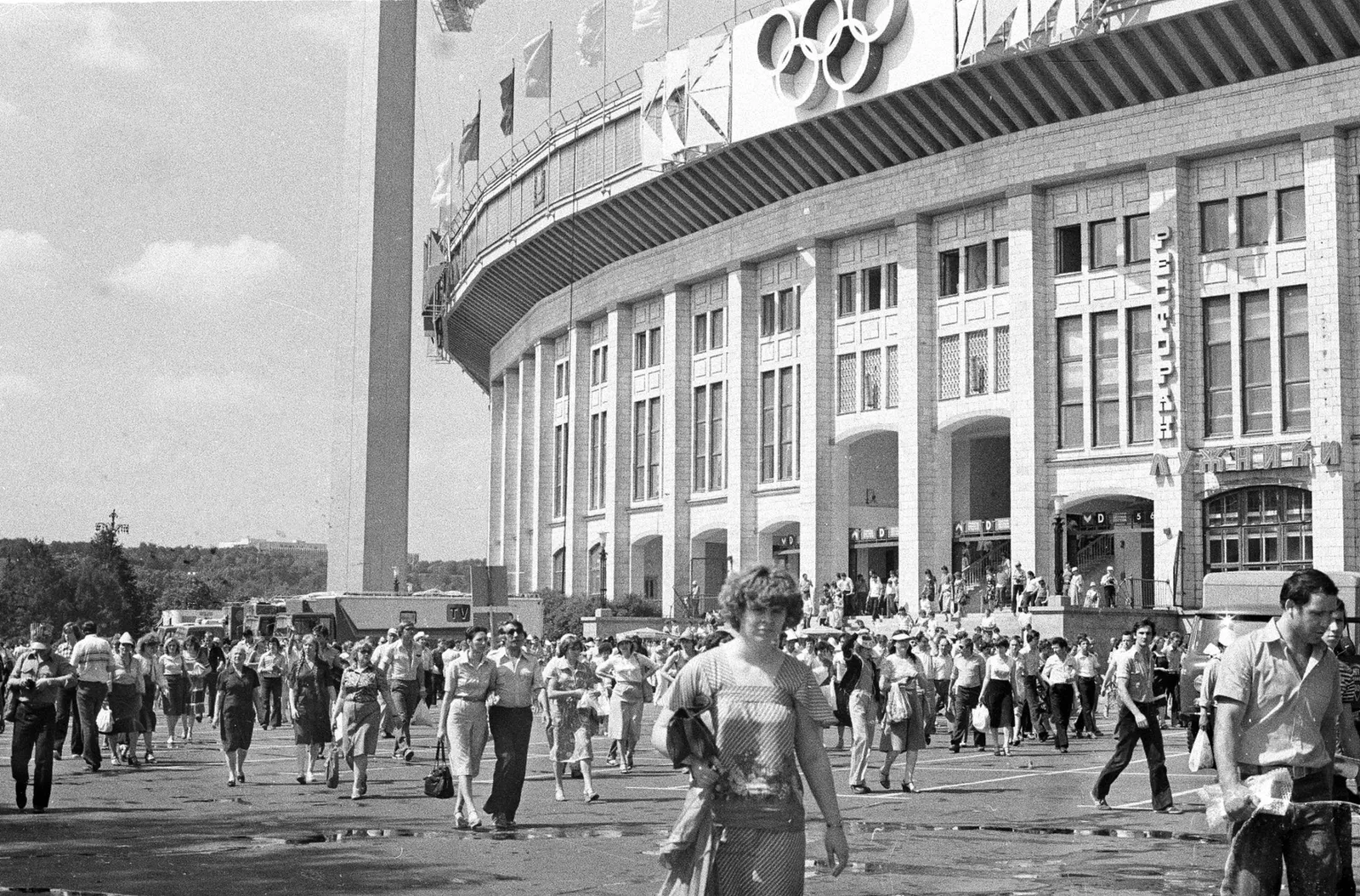
Photo: Autor desconocido (mos.ru) / Wikimedia Commons · CC BY 4.0 · Source
In memoriamOctober 20, 1982 · Spartak Moscú
Luzhniki 1982: the tragedy the USSR silenced
On 20 October 1982, at the end of a Spartak Moscow v Haarlem UEFA Cup match, dozens of fans died on a staircase at the Lenin Stadium, and for seven years almost no one could speak about it.
- Date of the event:
On 20 October 1982, Spartak Moscow hosted HFC Haarlem, from the Netherlands, in the first leg of the second round of the 1982-83 UEFA Cup, the round of 32. The match was played at the Central Lenin Stadium, today's Luzhniki, which two years earlier had been the main venue of the Moscow Olympic Games. The city was living through an early winter: it had snowed, the stands were covered in snow and by night the temperature had dropped to around ten degrees below zero.
The cold kept people away. In a stadium with room for about 82,000, there were only around 16,000 spectators, and most of them sat in the east stand, Stand C, the one closest to the metro station. According to several witnesses, only one passage was opened for leaving, which made police control easier but forced thousands of people down through the same place.
Vista del complejo de Luzhniki en 1980, con el Estadio Central Lenin al fondo y el pabellón Druzhba adelante.
Photo: S. Voikov / Glavarjiv de Moscú (mos.ru) / Wikimedia Commons · CC BY 4.0 · Source
The match and the staircase
Spartak went ahead in the 16th minute with a goal by Edgar Gess. The 1-0 held until the end, and many fans began to leave before the final whistle to escape the cold. With about twenty seconds to go, Sergei Shvetsov scored to make it 2-0. Years later, the striker would say he wished he had never scored that goal.
The tragedy happened on staircase number 1 of Stand C, where the people coming down were trapped in a narrow section. The railings gave way under the pressure and many people fell. The most widespread account says the roar of the second goal made some fans try to go back to the stands, where they collided with those leaving; the official investigation, however, spoke of a fall on the last steps that stopped those coming behind. Other witnesses blamed the way the police organised the exit. Even today there is no single account.
The official figure is 66 dead and 61 injured, and many of the victims were teenagers and young people. Over time, much higher estimates appeared: in 1989 a figure of 340 dead was mentioned, a number based on relatives' testimonies that could never be verified and should be taken only as an estimate.
La tribuna Kick Smit del estadio del HFC Haarlem, el rival del Spartak aquella noche, en febrero de 2025.
Photo: Joris van Rooden / Wikimedia Commons · CC BY-SA 4.0 · Source
Silence, truth and trial
For years, the tragedy barely existed in public. The next day, the newspaper Vechernyaya Moskva published only a brief note about an accident, with no figures, and the sports reports on the match did not mention it. The players of both teams left the stadium without knowing what had happened. The funerals took place under surveillance, and in the following years matches in October at that stadium were avoided, to prevent tributes.
In February 1983, a Moscow court tried the case. The stadium's director, Viktor Kokryshev, and its chief commandant, Yuri Panchikhin, were sentenced to three years for negligence; the first was granted an amnesty and the second served only part of the sentence, in corrective labour. The full story began to come out with the openness of glasnost: on 8 July 1989, the newspaper Sovetsky Sport published the report "The Dark Secret of Luzhniki". That same year, Aleksandr Shpeyer, the investigator who had handled the case, confirmed the official figure of 66 dead in Izvestia.
Memory today
In 1992, on the tenth anniversary, the monument "To Those Who Died at the Stadiums of the World" was unveiled at Luzhniki, promoted by Spartak fans; it also remembers cities where supporters died in other tragedies. On 20 October 2007, Spartak and Haarlem veterans played a tribute match at Luzhniki that ended 2-2. Every 20 October, fans, relatives and club representatives lay flowers at the monument. To remember that night is to remember that behind every shirt there is a stand, and in that stand there were people.
Timeline
Spartak Moscow 2-0 HFC Haarlem in the UEFA Cup; at the end of the match, the tragedy on the Stand C staircase.
The newspaper Vechernyaya Moskva runs a brief note about an accident, with no casualty figures.
The trial opens in Moscow; the stadium's director and its commandant are sentenced to three years.
Sovetsky Sport publishes "The Dark Secret of Luzhniki" and the tragedy breaks its silence.
Spartak and Haarlem veterans play a tribute match at Luzhniki (2-2).
Fans, relatives and the Spartak squad lay flowers at Luzhniki, 37 years after the tragedy.
44 years since the Luzhniki tragedy.
Verified sources
15 sources consulted
- Newspaper or magazine. Argumenty i Fakty: 35 años de la tragedia de Luzhniki (2017) View source
- Website. Komandirovka.ru: monumento a los caídos en los estadios del mundo View source
- Newspaper or magazine. Sport-Express: Tedesco, Zorn y el Spartak honran a las víctimas de Luzhniki (2019) View source
- Website. StadiumDB: Moscow, 33 years ago, but still unclear (2015) View source
- Newspaper or magazine. Sport24: la avalancha de Luzhniki y cómo se la silenció en la URSS (2021) View source
- Newspaper or magazine. Al Jazeera: The little-known story of Russia's worst sporting tragedy (2019) View source
- Website. MAX Vandaag: la tragedia del estadio de Moscú tras Spartak-Haarlem View source
- Newspaper or magazine. Radio Svoboda: memoria de la tragedia de Luzhniki y homenaje del Spartak (2019) View source
- Newspaper or magazine. Life.ru: la tragedia de Luzhniki y el monumento a los caídos en los estadios del mundo View source
- Website. Mos.ru (Ciudad de Moscú): el monumento a los caídos en los estadios del mundo View source
- Website. UEFA.com: Respects paid at Moscow match (2007) View source
- Website. UEFA.com: Moscow remembers stadium tragedy (2007) View source
- Website. UEFA.com: Spartak commemorate Lenin Stadium disaster (2012) View source
- Website. Wikipedia (en): Luzhniki disaster View source
- Newspaper or magazine. E1.ru: la tragedia más grave del deporte soviético (2025) View source
Keep exploring
- May 15, 2004 · ArsenalArsenal 2003-04: The InvinciblesThe season Arsène Wenger's Arsenal won the Premier League without losing a single match: 26 wins, 12 draws and a golden trophy.
- May 5, 1973 · SunderlandSunderland 1973: the Cup that went to a Second Division sideOn May 5, 1973, Sunderland, then in the Second Division, beat Leeds United 1-0 at Wembley to win the FA Cup.
- May 26, 1993 · O. de MarsellaMarseille 1993: the night in Munich and the VA-OM affairOn May 26, 1993, Olympique de Marseille beat Milan 1-0 in Munich to become the first French club to be crowned champions of Europe, shortly before a bribery scandal changed their history.
- July 27, 1979 · Club OlimpiaOlimpia 1979: the year El Decano touched the skyIn 1979, Olimpia won their first Copa Libertadores against Boca Juniors and were then crowned intercontinental champions against Swedish side Malmö.